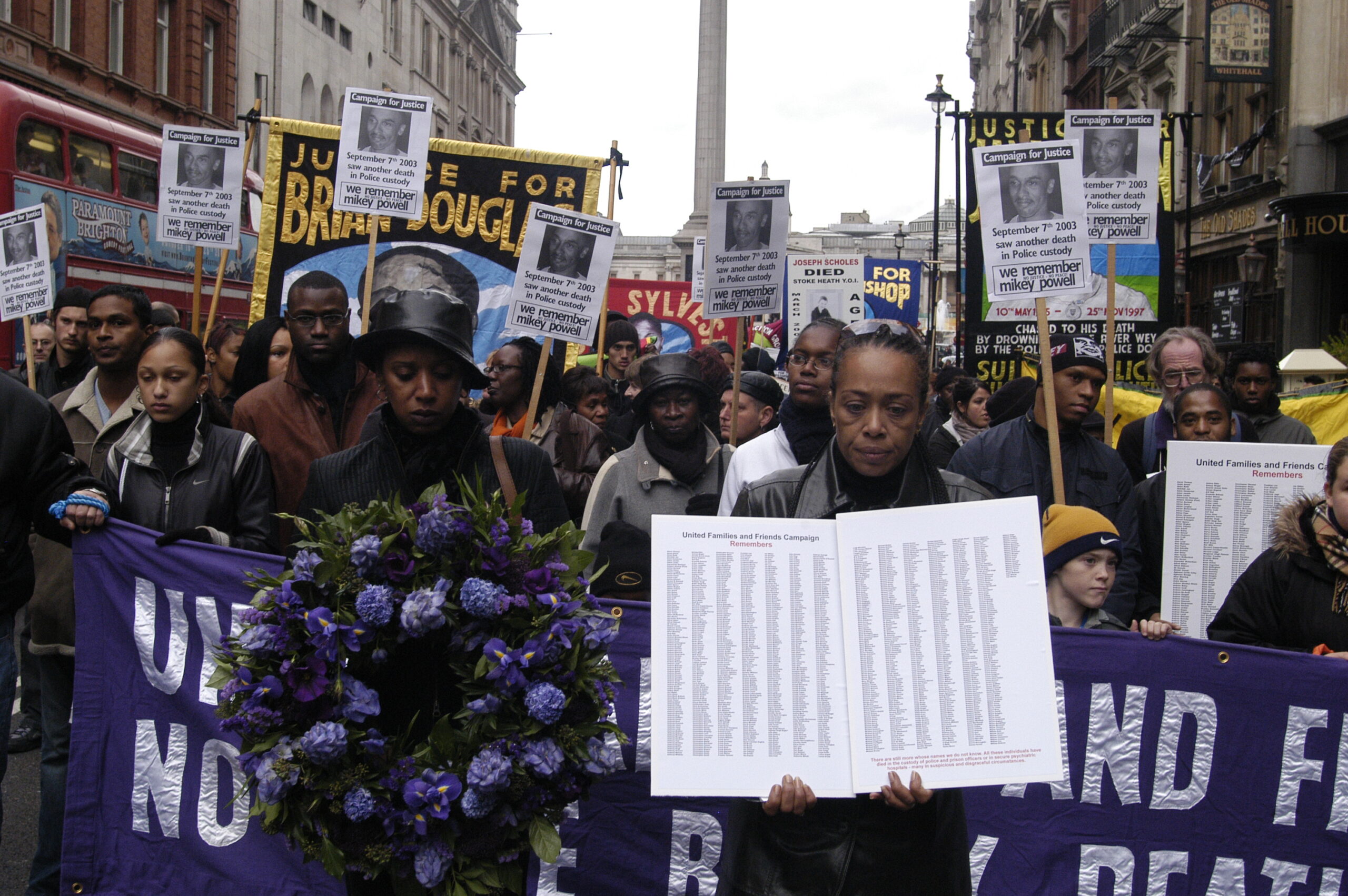
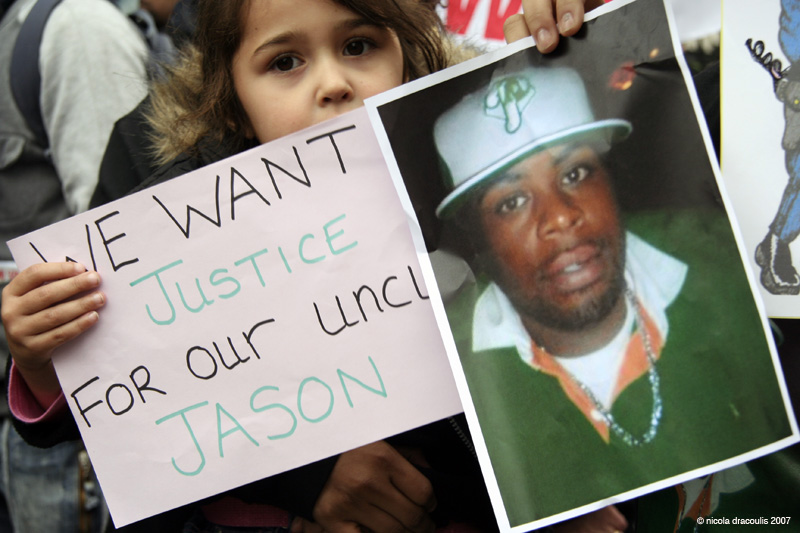
The People’s Tribunal took place on Saturday 5th and Sunday 6th April 2025 in London, and was also broadcast live online. This tribunal heard from the families whose loved ones have been killed by the police. We heard oral evidence from our expert witnesses and our use of force expert, with panel members asking questions throughout, before presenting their summaries after hearing all the evidence. The families presented their full testimonies ensuring it was their stories, and the thousands of others like theirs, which are at the forefront of the movement.
Context
The motivations that have driven the formation of the People’s Tribunal are rooted in the desire to unify struggles, to reject liberal containment and to pay tribute to those that have fought—but also to build an organisation run by the generations of victims who grow up with the immense burden, as well as anger, of the death of their mothers, fathers, brothers, sisters, friends. This inspiration to organise began in France.
- On October 28, 1982, Wahid Hachichi, 18, a student from Vaulx-en-Velin, was shot and killed by police in Lyon.
- On November 6, Abdennbi Guemiah, 19, a student from Nanterre, was shot dead by a neighbour.
The families and friends of Wahid and Abdennbi met with others to organise. They declared themselves ‘Les Folles le Place Vendôme’ (The Mothers of Place Vendôme) in reference to the mothers of the ‘Las Madres de Plaza de Mayo’ (The Mothers of Plaza de Mayo) in Argentina, who drew international attention to the fate of their missing children—the student victims of the dictatorship—by protesting on a regular basis. The connection between the Place de Mayo to the Les Folles le place Vendôme inspired the formation of the United Families and Friends Campaign (UFFC), the coalition of the families of people killed by the police in the 1990s in the UK. The political position of the ‘Les Folles le place Vendôme’ on empowerment of families strongly influenced the UFFC, as captured in the radical documentary Injustice (Fero & Mehmood, 2001).
Now the People’s Tribunal on Police Killings continues that struggle. This legacy—that is both personal from the point of the families and political from the point of view of the movement—is international in its approach and is built on an obstinate memory that nothing can destroy.
Continuation of a Movement
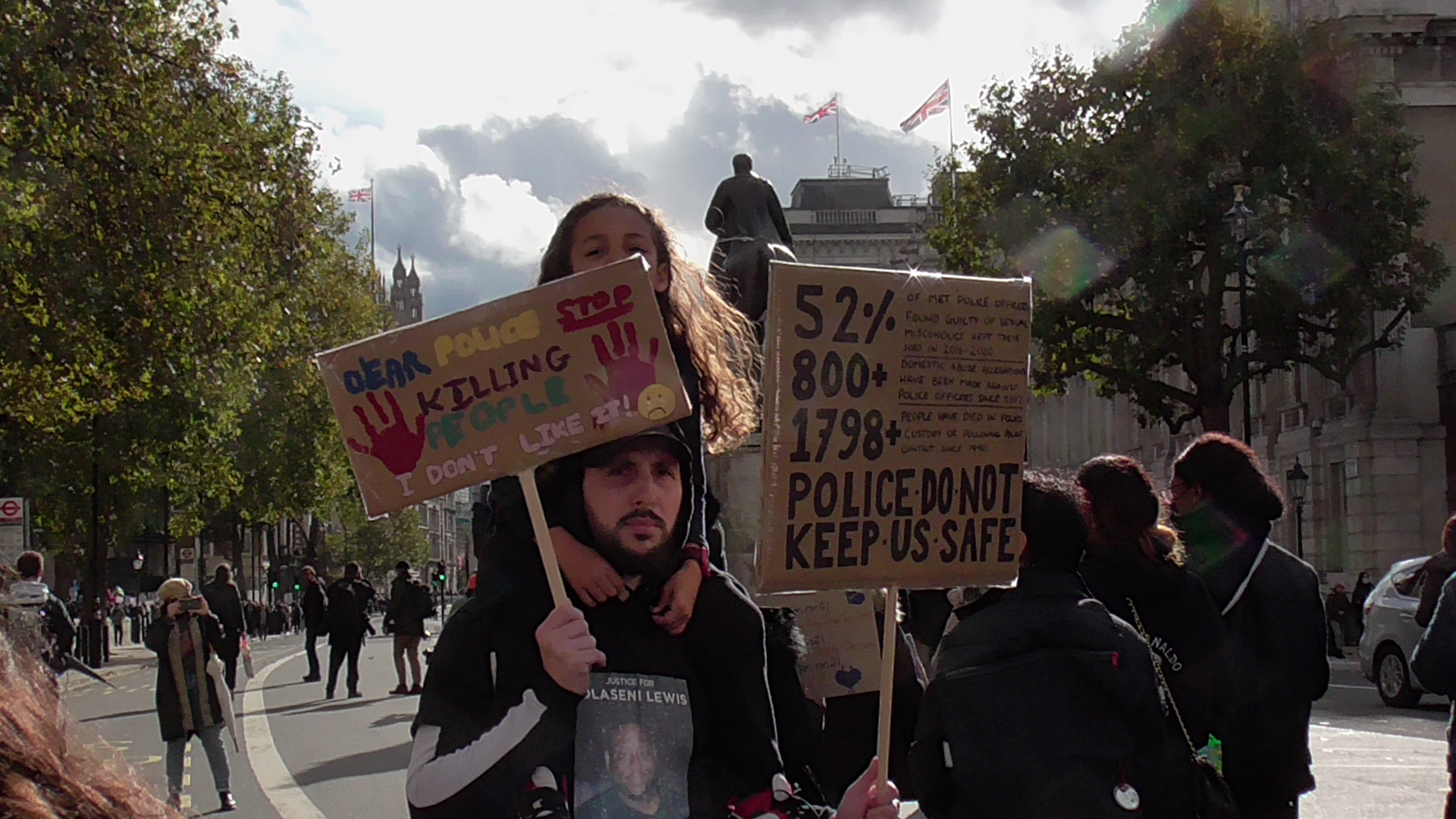
Our objectives were articulated at the tribunal event. The event, however, should be understood as the continuation of a movement. The People’s Tribunal is an ongoing series of actions to build momentum for an ongoing movement. It is about bringing people who are impacted by, and want to resist, state violence together.
We are building connections and solidarities with other movements. Police killings do not stand in isolation and are connected to many other state-building projects precipitated by neoliberalism. These projects include maintaining violent borders, detention across various settings, the ongoing mass-imprisonment of racialised and working-class people, surveillance and environmental degradation in the name of Capital. This is why we take an anti-colonial and anti-imperialist stance in all our work.
Following The People’s Tribunal on Police Killings there will be three further tribunals; on killings in the context of immigration detention, in prisons, and in secure mental health units. We will continue to expose the violence of the UK state through building the people’s tribunal as a grassroots force.